
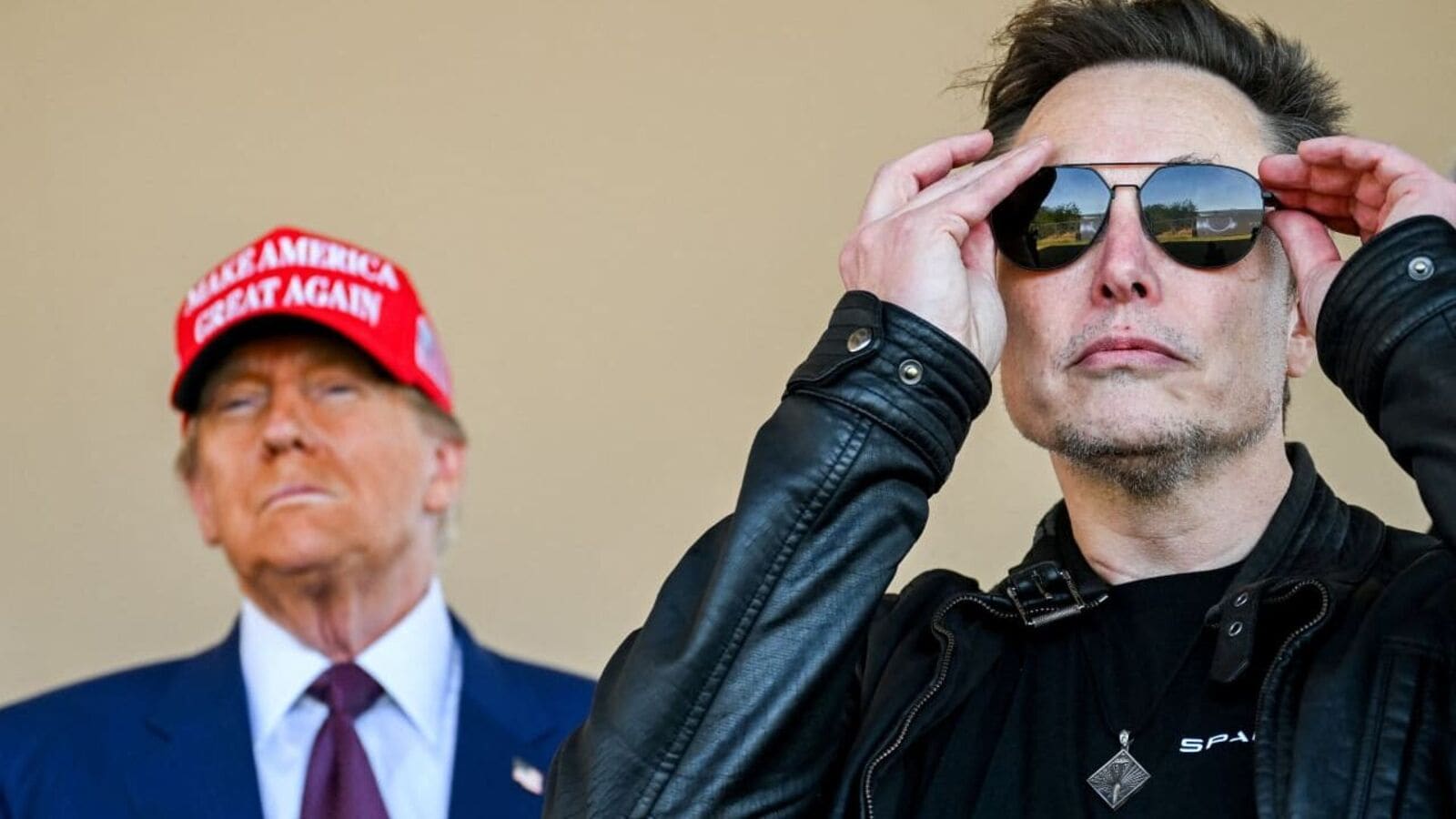
As Jeff Bezos and Mark Zuckerberg try to curry favor with the incoming president, they appear to be warming to Donald Trump’s “First Buddy” Elon Musk after years of frosty relations. It’s all part of a dance where the two are trying to escape the incoming president’s longtime ire and direct it elsewhere within the tech world.
That lovefest was on display this past week. Musk and Bezos exchanged early Valentines through postings on X about each other’s respective rocket launches. And Zuckerberg—who was agreeing not long ago to cage fight Musk—delivered the sincerest form of flattery: imitating Musk by going Trumpcore and abandoning Meta’s fact-checking and DEI principles.
“Real Mark,” as the Facebook co-founder described himself on Joe Rogan’s podcast, sounded a lot like Musk in recent years. The Tesla and SpaceX CEO has rallied against the “woke mind virus,” his term for progressive policies, such as diversity, equity and inclusion, that he says weaken organizations.
Musk’s relationships with business rivals Bezos and Zuckerberg have long been notable for their public confrontations—often punctuated by Musk’s own tweets.
When Bezos’ rocket company, Blue Origin, years ago protested a government contract given to SpaceX, Musk responded with some double-entendre about his rival’s performance: “Can’t get it up (to orbit) lol.”
Toward the end of this past week, however, rocket launches by each man’s space company appeared to bring them together. Musk even latched on to a meme from the movie “Step Brothers,” about warring boys who later become buddies with the iconic line: “Did we just become best friends?”
“Step Brothers is the perfect meme for @JeffBezos & me,” Musk tweeted Thursday.
Zuck’s latest moves were also subsequently cheered on by Musk.
“This is cool,” Musk posted about Facebook dumping fact-checkers for X-like community notes. That was a markedly different tone from 2023. Back then, the two exchanged digital blows as Meta launched an X-like competitor and Zuckerberg’s team seemed to revel in Musk’s struggles after acquiring Twitter-turned-X.
Now so many months later, Musk’s gamble to acquire Twitter is seen by some as a victory. And it has given him enormous influence that he used to help get Trump elected.
In publicly embracing Trump, Musk talked about how going “loud and proud” would encourage others to stand up and support the Republican as a candidate—something that now seems to be happening among Musk’s own billionaire peers.
“A lot of people…would like to support Donald Trump but they aren’t sure if anyone around them does, too,” Musk told a crowd in Harrisburg, Pa., in October ahead of the election. His advice then and elsewhere was to wear a Trump T-shirt, get a MAGA hat; post a campaign sign. “If people confront you, you say, `Yeah, that’s right!’” Musk told another crowd to cheers. “That’s how it goes.”
That public support—along with the hundreds of millions of dollars spent to help the campaign—looks to have given Musk a special place in the incoming Trump administration. Musk has been seen often at Trump’s Mar-a-Lago club in Florida and been weighing in on matters, including trying to shape appointments and preparing for his role as co-head of the Department of Government Efficiency.
With Musk in good graces, others see an opportunity to make amends, perhaps aiming to recast the narrative about their place in the Trump world after being made out as the bad guys in the first administration.
Bezos and Zuckerberg as well as Apple CEO Tim Cook and Alphabet CEO Sundar Pichai are among the tech leaders expected to attend Monday’s inauguration.
It comes as Amazon, Apple, Alphabet and Meta face intense scrutiny from antitrust enforcers around the world, including the U.S. government, whose current efforts in some ways date back to Trump’s first administration.
For some, though, it is hard to imagine antitrust cases will evaporate once Trump is back in the White House.
“One flight to Washington and an inaugural ball is not going to get you out of a tech case,” Paula Blizzard, California’s chief antitrust enforcer, said at a recent Silicon Valley conference held by Concurrences, the law publication.
Still, the personal touch has shown to be effective with the incoming president. Before Musk, Apple’s Cook was one of the savviest at navigating Trump, developing a personal relationship during the first administration.
This time around, it seems his rivals aren’t going to let Cook have Trump’s ear exclusively.
While Zuckerberg is embracing Musk’s corporate politics, he appears to be attempting to paint Apple as the real baddie in Big Tech, reigniting tensions with the iPhone maker who has been defending its app rules and revenue share as about safety and fairness while developers say they go too far.
As Zuckerberg talked about changes to Meta meant to please Trump, he pointed to Apple’s control of the App Economy as the real threat to innovation. In his interview on Rogan’s podcast, he suggested Meta would make twice as much profit without Apple’s rules. “And that’s just us,” he said. “All of these small companies can’t even exist because the taxes that they put in place.”
Musk, too, revisited the issue this past week, amplifying his own concerns to his more than 200 million followers.
The reality of the Big-Tech Bro Truce may be simple: The enemy of my enemy is my frenemy.
Write to Tim Higgins at tim.higgins@wsj.com
